Save 20% on self-care essentials
The Difference Between Stress and Burnout
Why do I feel exhausted even when I’m not doing anything?
MIND YOUR MIND
3/30/20263 min read
“Why do I feel exhausted even when I’m not doing anything?”
Some days you feel overwhelmed, busy, stretched thin, but still able to push through.
Other days, everything feels heavier. Not just hard but empty. Draining. Like something inside you has shut down.
You might wonder:
Is this just stress… or something deeper?
Understanding the difference between stress and burnout isn’t about labelling yourself. It’s about recognizing what your mind and body are actually asking for so you can respond with care instead of pressure.
When Everything Starts to Blur Together
Stress and burnout often feel similar at first.
You might notice:
Constant fatigue
Irritability or emotional overwhelm
Difficulty concentrating
Feeling behind, no matter how much you do
Trouble resting or switching off
But over time, something shifts.
Stress feels like too much.
Burnout feels like nothing left.
That difference can be hard to name especially when you’ve been pushing through for a long time.
Many people stay in stress so long that they don’t realize when it becomes burnout.
What’s Actually Happening
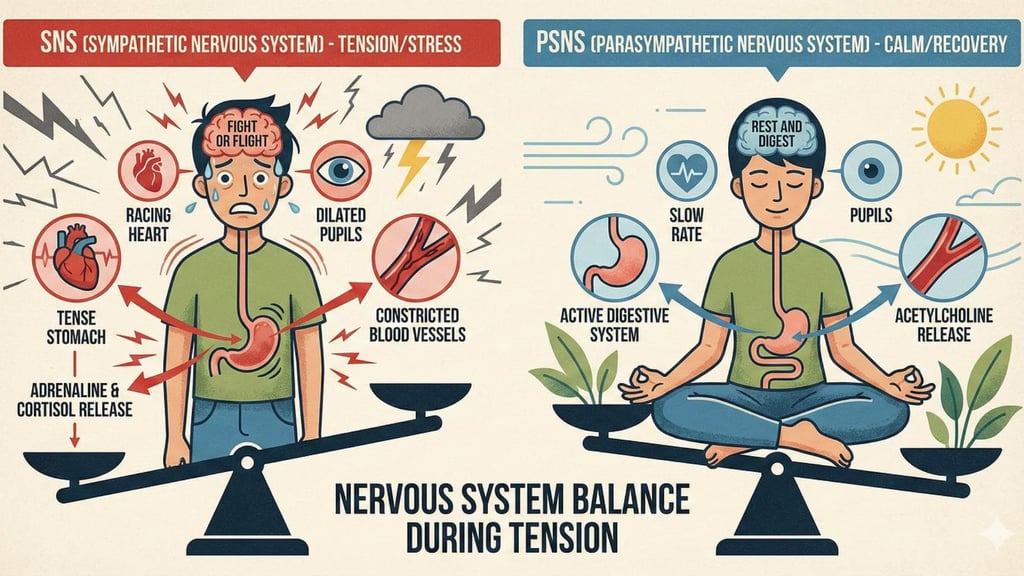
1. Stress = Overactivation (Too Much Energy)
Stress is your body’s response to pressure, demands, or perceived challenges.
It often feels like:
urgency
tension
racing thoughts
physical tightness
You’re overloaded but still engaged.
You still care. You still try. You still respond.
Harvard Health explains how stress activates the body’s fight-or-flight response, increasing alertness and energy:
https://www.health.harvard.edu/staying-healthy/understanding-the-stress-response
2. Burnout = Depletion (Energy Collapse)
Burnout happens when stress is prolonged without recovery.
Instead of feeling activated, you begin to feel:
emotionally numb
disconnected
unmotivated
mentally exhausted
You’re no longer just overwhelmed you’re drained.
The World Health Organization (WHO) defines burnout as a syndrome resulting from chronic workplace stress that has not been successfully managed:
https://www.who.int/standards/classifications/classification-of-diseases
3. Stress pushes you forward — burnout pulls you back
Stress says: “Keep going.”
Burnout says: “I can’t anymore.”
Stress still has momentum.
Burnout has resistance.
4. Stress is temporary — burnout lingers
Stress can come and go with circumstances.
Burnout tends to:
last longer
affect multiple areas of life
take more time to recover from
5. Stress affects your body — burnout affects your identity
With stress, you may feel overwhelmed by tasks.
With burnout, you may start questioning:
your abilities
your motivation
your sense of self
This is why burnout often feels heavier and more confusing.
How to Respond Based on What You’re Experiencing
The most important step is this:
Don’t treat burnout like stress.
They require different kinds of support.
If You’re Experiencing Stress (Overload)
Your goal is to reduce pressure and regulate your nervous system.
1. Simplify your inputs
fewer tasks
fewer decisions
fewer distractions
2. Take structured pauses
Short breaks throughout the day prevent accumulation.
3. Ground your body
Breathing, stretching, or stepping outside can help reset.
The Mini Self-Care Checklist (Fillable PDF) helps you choose one realistic action when your mind feels overloaded.
If You’re Experiencing Burnout (Depletion)
Your goal is to restore energy — not push through.
1. Lower expectations temporarily
Burnout recovery requires less pressure, not more discipline.
2. Prioritize rest without guilt
Not as a reward as a necessity.
3. Reconnect slowly with yourself
Gentle journaling, quiet reflection, or simply noticing how you feel.
Many readers begin with the Mind Your Mind™ Journal to rebuild awareness gently.
Support Both States with Gentle Practices
4. Externalize what you’re carrying
Write thoughts down instead of holding them internally.
The Reflection Prompt Card (Free Download) offers simple starting points.
5. Reduce internal pressure
Pay attention to self-talk:
“I should be doing more” → “I’m allowed to slow down.”
6. Create predictable calm moments
Even small daily anchors help your nervous system feel safe.
The 7-Day Mindfulness Journal (Free Download) supports consistent, low-pressure grounding.
7. Allow your recovery to be non-linear
Some days will feel lighter. Others won’t.
That doesn’t mean you’re not healing.
8. Focus on capacity, not productivity
Ask:
What do I have energy for today?
instead ofWhat should I accomplish?
9. Recognize when you need deeper support
Burnout especially may require:
extended rest
lifestyle changes
professional support
You don’t have to navigate it alone.
10. Start where you are not where you think you should be
Both stress and burnout improve with gentle consistency, not intensity.
Your Calm Starter Kit was designed for moments when your mind needs support without pressure.
You’re Not Behind, You’re Responding
If you’re feeling stressed, it means your system is trying to keep up.
If you’re feeling burned out, it means your system has been trying for too long.
Neither state is a failure.
They’re signals.
And signals aren’t meant to be ignored or pushed through they’re meant to be understood.
You don’t need to prove your resilience by continuing to push.
You can respond with care.
Gentle Next Steps
If you’re navigating stress or burnout, you’re welcome to explore these supports if they feel helpful:
📓 Mind Your Mind™ Journal — reflective pages for clarity and emotional awareness
🌿 7-Day Mindfulness Journal (Free Download) — short daily grounding practices
✅ Mini Self-Care Checklist (Fillable PDF) — simple support for overwhelmed days
✍️ Reflection Prompt Card (Free Download) — gentle emotional check-ins
🌿 Calm Starter Kit — a soft bundle designed for mental and emotional recovery
✉️ Join the Mind Your Co. newsletter for occasional, calm-first reflections
You don’t need to push through everything.
You just need to understand what your mind is asking for — and meet it there.
Mind Your Co. A Safe Space to Heal, Grow and Find Peace Within.
© 2026. All rights reserved.
Explore
Support
Stay Connected
Join the Mind Your Co. community and receive mindful inspiration, self-care tips, exclusive freebies, and early access to new journal drops delivered with calm and intention.
Newsletter