The Calm Reset Bundle Workbook is Now Available for the Launch Price !!

Understanding Mental Illness vs. Mental Health
Learn the difference between mental health and mental illness, including emotional wellness, common misconceptions, warning signs, and why compassionate mental health awareness and support matter for overall well-being.
MIND YOUR HEALING
Mind Your Co. Editorial Team
2/2/2026
Have you ever felt overwhelmed, anxious, or just "not yourself" for an extended period, wondering if something was truly wrong? Or perhaps you've heard terms like "mental health" and "mental illness" used interchangeably, leaving you confused about what they actually mean for you? It’s a common experience, and one that often carries a heavy, unspoken weight.
Understanding the Struggle: Navigating the Murky Waters of Well-being
In our fast-paced world, it's easy to feel lost when it comes to our inner state. You might be experiencing persistent low mood, an inability to concentrate, overwhelming worry, or even physical symptoms like fatigue and digestive issues, all without a clear explanation. You might think, "Is this just stress, or is something more serious happening?" This uncertainty itself can be a significant source of distress, making you feel isolated or even ashamed.
The societal conversation around mental well-being is evolving, but lingering stigmas often prevent us from openly discussing our struggles. We might minimize our feelings, fearing judgment or dismissal. "Everyone gets stressed," we tell ourselves, or "I should just be able to snap out of it." This internal dialogue, fueled by a lack of clear understanding, can make the journey toward peace and clarity feel incredibly daunting. You're not alone in feeling this way. Many people grapple with these very questions, silently seeking answers that can bring a sense of order to their emotional landscape.
The Root Cause: Deconstructing the Nuances
The confusion between mental health and mental illness stems from a lack of precise language and a historical tendency to lump all emotional and psychological struggles into one vague category. However, just as physical health and physical illness are distinct concepts, so too are their mental counterparts.
What is Mental Health? (It's For Everyone)
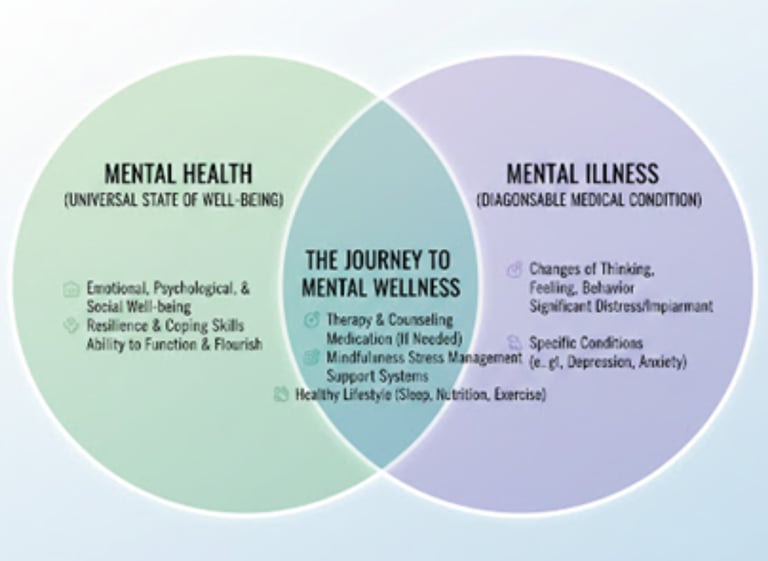
Think of mental health as your overall state of psychological well-being. It’s the foundation upon which you build your life. Everyone has mental health, just as everyone has physical health. It's a dynamic and fluid state that encompasses:
Emotional Well-being: Your ability to understand and manage your emotions, experience joy, sadness, anger, and fear in healthy ways.
Psychological Well-being: Your capacity to cope with life's stresses, make meaningful contributions, realize your potential, and maintain a sense of purpose.
Social Well-being: Your ability to form and maintain healthy relationships, connect with others, and feel a sense of belonging.
Good mental health doesn't mean you're constantly happy or free from challenges. Instead, it means you possess the resilience and coping mechanisms to navigate life's inevitable ups and downs effectively. When your mental health is strong, you can bounce back from setbacks, adapt to change, and maintain a generally positive outlook. It's about flourishing, even amidst adversity.
Curious about your current mental health state? Our free " Mindful Reflection Prompts" guide can help you reflect on your emotional, psychological, and social well-being.
For a broader foundation, visit our Mental Wellness & Gentle Self-Care Guide. You can also explore our Mind Your Healing: Emotional Healing & Self-Compassion category page for more support with healing, self-kindness, burnout recovery, and emotional reflection.
What is Mental Illness? (A Specific Health Condition)
In contrast, a mental illness (or mental health condition) is a diagnosable medical condition that significantly impacts a person's thinking, feeling, mood, or behavior. These conditions cause considerable distress and/or impair one's ability to function in daily life, work, or relationships. They are not merely "bad moods" or signs of personal weakness.
Just like diabetes is a physical illness affecting the body's ability to regulate blood sugar, depression is a mental illness affecting mood regulation and other cognitive functions. Mental illnesses are complex, often resulting from a combination of:
Genetics: A family history of mental illness can increase susceptibility.
Brain Chemistry: Imbalances in neurotransmitters (chemical messengers in the brain) play a crucial role.
Life Experiences: Trauma, chronic stress, abuse, or significant loss can be powerful triggers.
Environmental Factors: Social isolation, poverty, discrimination, and lack of support can contribute.
Examples of common mental illnesses include:
Major Depressive Disorder: Persistent sadness, loss of interest, changes in sleep/appetite, fatigue.
Generalized Anxiety Disorder: Excessive, uncontrollable worry about various aspects of life.
Bipolar Disorder: Episodes of extreme mood swings, including emotional highs (mania) and lows (depression).
Schizophrenia: A severe disorder affecting how a person thinks, feels, and behaves, often involving psychosis.
Post-Traumatic Stress Disorder (PTSD): Develops after experiencing or witnessing a terrifying event.
Obsessive-Compulsive Disorder (OCD): Characterized by intrusive thoughts (obsessions) and repetitive behaviors (compulsions).
It's vital to understand that a mental illness is not a character flaw. It's a health condition that requires understanding, compassion, and often professional intervention.
Mindful Solutions: Nurturing Your Path to Wellness
Regardless of where you are on these continuums, proactive steps are essential for fostering mental wellness. Here are practical, evidence-based strategies:
1. Prioritize Sleep Hygiene: Consistent, quality sleep is foundational for brain function and emotional regulation. Aim for 7-9 hours, establish a regular sleep schedule, and create a calming bedtime routine.
2. Embrace Mindful Movement: Physical activity isn't just for your body; it's a powerful antidepressant and anxiolytic. Whether it's a brisk walk, yoga, dancing, or strength training, find movement you enjoy. Pay attention to how your body feels during exercise to enhance its mindful benefits.
3. Nourish Your Brain: What you eat profoundly impacts your mood and cognitive function. Focus on whole, unprocessed foods, healthy fats (omega-3s), and plenty of fruits and vegetables. Reduce sugar and processed foods.
4. Practice Mindfulness and Meditation: Even a few minutes of daily mindfulness can rewire your brain for greater calm and focus. Apps like Calm or Headspace can guide you. Start with simple breath awareness exercises.
5. Cultivate Meaningful Connections: Humans are social beings. Nurture your relationships, seek out supportive friends and family, and consider joining communities or groups that align with your interests. Social support is a powerful buffer against stress and loneliness.
6. Learn and Practice Emotional Regulation Skills: Tools like journaling, deep breathing, progressive muscle relaxation, and cognitive reframing can help you manage intense emotions and challenge unhelpful thought patterns.
7. Seek Professional Support (When Needed): This is crucial. If you suspect you might have a mental illness, or if your mental health struggles are significantly impacting your life, reaching out to a mental health professional is a sign of strength.
Therapy (Psychotherapy): A therapist can provide tools, strategies, and a safe space to process emotions and develop coping mechanisms.
Medication: For some mental illnesses, medication can help rebalance brain chemistry and alleviate severe symptoms. A psychiatrist or medical doctor can assess this need.
If you are beginning your healing journey, read How to Start Emotional Healing When You Don’t Know Where to Begin.


Written by Mind Your Co. Editorial Team
Reviewed for clarity, compassion, and self-care alignment. Mind Your Co. creates guided journals, reflection tools, and gentle wellness resources to support everyday mental wellness.
Gentle Disclaimer
Mind Your Co.™ creates tools for self-reflection, mindfulness, journaling, and personal growth. This article is for educational and supportive purposes only. It is not medical advice, mental health treatment, or a diagnosis. If you feel unsafe, overwhelmed, in crisis, or concerned about your mental health, please contact a licensed professional, healthcare provider, emergency service, or local crisis support provider.
Gentle Support, If You Want It
If you’d like soft tools to support your healing journey, you’re welcome to explore:
Reflection Prompt Card (Free Download) — one-sentence emotional check-ins
Mini Self-Care Checklist (Fillable PDF) — simple care for heavy days
Mind Your Mind™ Journal — guided space for mental clarity
7-Day Mindfulness Journal (Free Download) — short daily grounding
Join the Mind Your Co. newsletter for occasional, calm-first reflections
You don’t have to heal perfectly, you just have to begin gently.
(New ?👣)
Start Here
© 2026. All rights reserved.
Explore
Support
Stay Connected
Join the Mind Your Co. community and receive mindful inspiration, self-care tips, exclusive freebies, and early access to new journal drops delivered with calm and intention.
Newsletter
Mind Your Co.™ offers tools for self-reflection, mindfulness, and personal growth. Our content is not a substitute for professional mental health care.