Save 20% on self-care essentials

Why You Feel Mentally Exhausted (Even When You’re Resting)
You might even start wondering if something is wrong with you. “Why can’t I recover the way everyone else seems to?” If this question has been looping in your head, you’re not alone — and you’re not failing at rest.
2/9/20264 min read
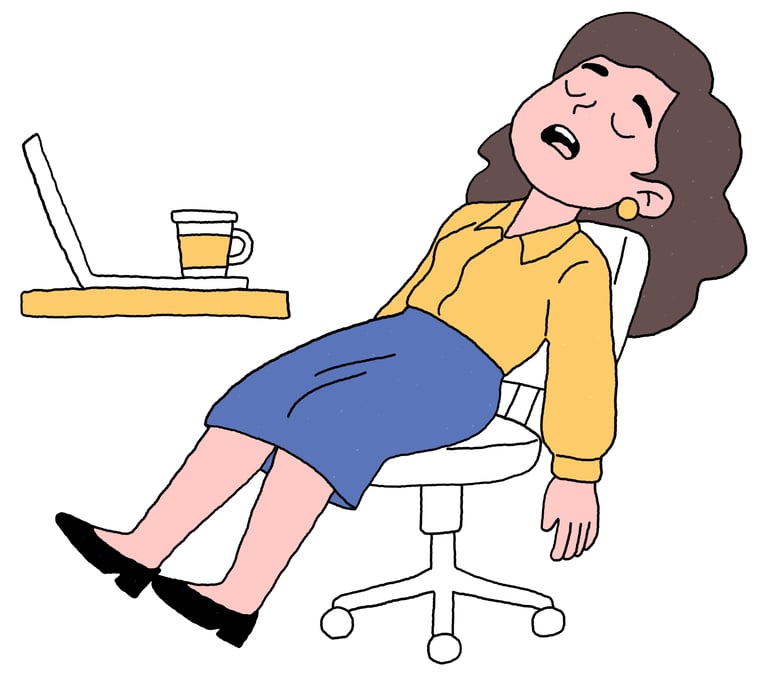
“Why am I still exhausted when I’m technically resting?”
You slept.
You cancelled plans.
You finally slowed down.
And yet… your mind still feels heavy. Foggy. Drained.
You might even start wondering if something is wrong with you. “Why can’t I recover the way everyone else seems to?” If this question has been looping in your head, you’re not alone and you’re not failing at rest.
Mental exhaustion doesn’t always resolve with sleep or time off. In many cases, it lingers because the brain is still working overtime, even when the body appears to be still. This article will help you understand why mental exhaustion persists, what’s actually happening inside your brain, and how to support recovery in a way that feels gentle instead of demanding.
When Rest Doesn’t Bring Relief
Mental exhaustion often shows up quietly. You may not feel physically depleted, but internally, everything feels harder.
You might notice:
Difficulty concentrating or making simple decisions
Feeling overwhelmed by small tasks
Emotional numbness or irritability
Forgetfulness or mental fog
A sense of being “on edge” even while resting
Guilt for resting but still feeling tired
What makes this especially frustrating is that you are trying to take care of yourself. You’re resting, stepping back, and slowing down, yet your mind doesn’t seem to catch up.
That disconnect can lead to self-blame: “I should feel better by now.”
But mental exhaustion doesn’t mean rest isn’t working. It often means the kind of rest you need is different from what you’ve been giving yourself.
Why Mental Exhaustion Persists
1. Your brain hasn’t exited survival mode
Chronic stress keeps the brain’s threat system activated. Even during downtime, your nervous system may still be scanning for danger, responsibilities, or unresolved stressors.
This means your mind is “resting” physically, but staying alert psychologically.
Harvard Health explains how chronic stress prevents the nervous system from fully shifting into recovery mode:
https://www.health.harvard.edu/staying-healthy/understanding-the-stress-response
2. Cognitive overload doesn’t shut off automatically
Mental exhaustion often comes from prolonged cognitive load:
Decision-making
Multitasking
Constant input (news, screens, notifications)
Emotional labor
Even when you stop working, your brain may still be processing unfinished mental loops.
The American Psychological Association notes that burnout and cognitive fatigue are linked to prolonged mental demands, not just lack of sleep:
https://www.apa.org/members/content/burnout-research
3. Emotional processing gets postponed
When life requires you to “keep going,” emotions often get deferred.
Rest can actually bring emotions to the surface, which may feel more exhausting at first. This doesn’t mean rest is harmful, it means your mind finally has space to process.
4. Rest without regulation isn’t restorative
Scrolling, binge-watching, or zoning out can provide distraction, but not always regulation.
True mental recovery requires nervous system regulation, not just inactivity.
The National Institute of Health highlights how intentional calming practices help the brain move into restorative states:
https://www.ncbi.nlm.nih.gov/pmc/articles/PMC6137615/
5. Internal pressure follows you into rest
If your inner dialogue stays harsh — “I should be doing more,” “I’m wasting time” — your brain doesn’t perceive rest as safe.
Mental exhaustion thrives under internal pressure, even in quiet moments.
How to Support Mental Recovery Gently
Mental recovery doesn’t require doing more. It requires doing differently.
1. Shift from “resting” to “regulating”
Ask yourself:
Does this activity help my nervous system settle?
Or does it just distract me?
Gentle regulation includes:
Slow breathing
Stretching
Sitting without stimulation
Being outdoors
The 7-Day Mindfulness Journal (Free Download) offers short daily practices designed to support nervous system regulation.
2. Reduce mental input, not just physical effort
Try giving your brain fewer things to process:
Fewer tabs open
Less background noise
One task at a time
Cognitive simplicity supports mental recovery.
3. Externalize what’s looping in your mind
Mental exhaustion worsens when thoughts stay trapped internally.
Writing them down without fixing them reduces cognitive load.
Many readers find relief using the Mind Your Mind™ Journal to gently unload mental noise.
4. Practice emotional containment
Instead of deep emotional work, try containment:
One page of journaling
One feeling named
One grounding breath afterward
Containment helps avoid emotional overwhelm.
5. Create “low-demand” recovery windows
Recovery improves when expectations are lowered.
Low-demand time means:
No productivity goals
No emotional breakthroughs required
Permission to simply be
The Mini Self-Care Checklist (Fillable PDF) helps choose one realistic support action on low-energy days.
6. Reassure your nervous system
Use calming self-talk:
“I’m safe right now.”
“Nothing is required in this moment.”
Compassionate language reduces internal stress.
The Speak Kindly to Your Mind™ Affirmation Deck supports gentle inner dialogue during recovery.
7. Restore predictability
Routine creates safety.
Small, predictable anchors help your nervous system relax:
Morning check-in
Evening wind-down
Daily quiet moment
8. Allow rest to be non-linear
Some days you’ll feel better. Others you won’t.
Healing isn’t a straight line, and mental recovery often comes in waves.
9. Limit decision-making
Decision fatigue fuels mental exhaustion.
Try:
Fewer choices
Simple meals
Repeated routines
Your brain recovers when it doesn’t have to decide constantly.
10. Reframe mental exhaustion
Mental exhaustion isn’t a weakness.
It’s often a sign that:
You’ve been holding a lot
You’ve been adapting continuously
Your brain needs safety, not discipline
Your Calm Starter Kit was created for moments when mental recovery needs gentleness, not pressure.
You’re Not Failing at Rest
If you’re mentally exhausted even while resting, it doesn’t mean you’re doing something wrong. It means your brain has been working hard for a long time often quietly, often without acknowledgment.
Recovery isn’t about forcing yourself to relax. It’s about creating conditions where your nervous system feels safe enough to let go.
You’re allowed to:
Take longer than expected
Rest without improvement as proof
Need different kinds of support
Mental exhaustion is not a personal failure. It’s a signal — and signals deserve care.
Gentle Next Steps
If mental exhaustion has been lingering, you’re welcome to explore these supports if they feel helpful:
📓 Mind Your Mind™ Journal — reflective pages for mental clarity and emotional regulation
🌿 7-Day Mindfulness Journal (Free Download) — short daily grounding practices
✅ Mini Self-Care Checklist (Fillable PDF) — realistic care for low-capacity days
🃏 Speak Kindly to Your Mind™ Affirmation Deck — compassionate reminders
🌿 Calm Starter Kit — a soft bundle designed to support mental recovery
✉️ Join the Mind Your Co. newsletter for occasional, calm-first reflections
You don’t need to recover faster.
You just need support that meets you where you are.
Mind Your Co. A Safe Space to Heal, Grow and Find Peace Within.
© 2026. All rights reserved.
Explore
Support
Stay Connected
Join the Mind Your Co. community and receive mindful inspiration, self-care tips, exclusive freebies, and early access to new journal drops delivered with calm and intention.
Newsletter