The Calm Reset Bundle Workbook is Now Available for the Launch Price !!

High-Functioning Anxiety Explained
Learn the hidden signs of high-functioning anxiety, including overthinking, perfectionism, and emotional overwhelm, plus gentle ways to support mental wellness, balance, and self-awareness.
MIND YOUR MIND
Mind Your Co. Editorial Team
4/20/2026
“How can I be doing well… and still feel anxious all the time?”
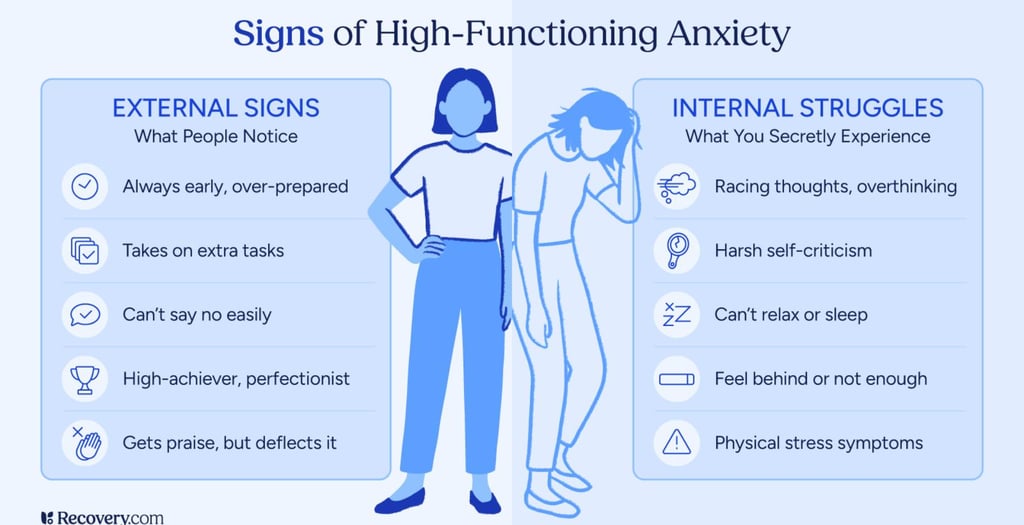
From the outside, everything looks steady, you meet deadlines, you show up for people, you stay organized, responsible and dependable.
But internally, your mind rarely slows down. There’s a constant undercurrent of worry, a quiet pressure to keep up, do more, and not fall behind.
If you’ve ever felt like you’re holding it together on the outside while struggling on the inside, you may be experiencing high-functioning anxiety.
When Anxiety Hides Behind Productivity
High-functioning anxiety doesn’t always look like panic or breakdowns.
It often looks like:
being reliable, but never relaxed
being productive, but never satisfied
being calm outwardly, but overwhelmed internally
You might notice:
overthinking even small decisions
difficulty resting without guilt
constantly planning ahead “just in case”
replaying conversations long after they’ve ended
setting high standards — then raising them again
feeling tense, even during downtime
What makes this form of anxiety confusing is that it’s often rewarded.
People may describe you as:
driven
organized
disciplined
successful
But those traits may be fueled not by ease but by pressure.
What’s Actually Happening Beneath the Surface
1. Anxiety becomes a motivator
Over time, your brain may learn:
If I stay alert, I stay safe.
This creates a loop where anxiety drives:
productivity
preparation
control
The result? You keep functioning, but at a cost.
2. Your nervous system stays in low-level alert
Even when nothing is wrong, your body may stay slightly activated:
shallow breathing
muscle tension
mental scanning
This is your nervous system trying to prevent problems before they happen.
Harvard Health explains how chronic low-level stress keeps the body in a prolonged state of alertness:
3. Perfectionism reinforces the cycle
High-functioning anxiety often pairs with:
fear of making mistakes
fear of disappointing others
fear of slowing down
Perfectionism keeps the system running, but prevents rest.
4. Rest can feel uncomfortable
When your identity becomes tied to productivity, slowing down can trigger:
guilt
restlessness
increased anxious thoughts
So instead of resting, you stay busy.
5. Emotional needs get deprioritized
You may be very aware of what needs to get done, but less aware of what you need.
Over time, this creates:
emotional disconnection
internal pressure
delayed burnout
For a broader foundation, visit our Mental Wellness & Gentle Self-Care Guide. You can also explore our Mind Your Mind: Stress, Overwhelm & Mental Clarity category page for more support with stress, overwhelm, racing thoughts, grounding, and mental clarity.
Supporting Yourself Without Losing Your Structure
You don’t need to stop being capable, you just need to support the pard of you that's been carrying too much.
1. Separate productivity from worth
Notice when your value feels tied to what you accomplish.
Try shifting from:
“I need to do more to feel okay”
to“I’m allowed to feel okay without doing more”
The Reflection Prompt Card (Free Download) helps you gently explore these patterns.
2. Build “guilt-free” rest into your routine
Rest shouldn’t be something you earn.
Start with:
5–10 minute pauses
intentional slow moments
Your nervous system needs repetition to feel safe resting.
3. Externalize your thoughts instead of looping them
Write down:
worries
plans
reminders
This helps your brain release the need to hold everything at once.
Many readers use the Mind Your Mind™ Journal for daily thought release.
4. Lower one expectation per day
You don’t need to lower everything.
Just one.
Ask:
What can I make easier today?
5. Notice your baseline tension
Pause and check:
Are your shoulders tight?
Is your jaw clenched?
Is your breath shallow?
Small physical awareness can interrupt anxiety loops.
6. Practice “enough” instead of “perfect”
Instead of aiming for flawless, try:
done
complete
sufficient
This reduces internal pressure over time.
7. Create transitions between tasks
High-functioning anxiety often keeps you moving without pause.
Try:
one breath between tasks
a short reset before starting something new
The Mini Self-Care Checklist (Fillable PDF) helps create small resets during busy days.
8. Allow yourself to feel without fixing
You don’t need to immediately solve:
discomfort
uncertainty
tension
Sometimes noticing is enough.
9. Reduce future-focused thinking
Anxiety often lives in “what if.”
Bring attention back to:
what’s happening now
what’s actually needed in this moment
10. Rebuild your relationship with calm
Calm may feel unfamiliar at first.
That’s okay.
You’re not losing your edge, you’re gaining balance.
The 7-Day Mindfulness Journal (Free Download) helps you practice calm in small, approachable ways.
You Don’t Have to Carry This Alone
High-functioning anxiety can make it look like you’re doing fine even when you’re not. But just because you can carry it doesn't mean you should have to.
You’re allowed to:
be capable and supported
be productive and rested
be strong and gentle with yourself
You don’t need to lose who you are. You just need to care for the parts of you that have been working overtime.
If this topic connects to emotional overload, read Why Do I Feel Overwhelmed So Easily? for a deeper look at why small things can feel heavy when your mind is already full.
Source & Further Reading
Written by Mind Your Co. Editorial Team
Reviewed for clarity, compassion, and self-care alignment. Mind Your Co. creates guided journals, reflection tools, and gentle wellness resources to support everyday mental wellness.
Gentle Disclaimer
Mind Your Co.™ resources are created to support reflection, mindfulness, and personal growth. They are not a replacement for professional mental health care.
Gentle Next Steps
If you recognize yourself in this, you’re welcome to explore these supports when they feel helpful:
Mind Your Mind™ Journal — reflective space for anxious thoughts
7-Day Mindfulness Journal (Free Download) — daily grounding practices
Mini Self-Care Checklist (Fillable PDF) — realistic support for busy days
Reflection Prompt Card (Free Download) — simple emotional check-ins
Calm Starter Kit — a soft bundle for mental and emotional balance
Join the Mind Your Co. newsletter for occasional, calm-first reflections
You don’t have to stop functioning. You just don't have to function under constant pressure anymore.
(New ?👣)
Start Here
© 2026. All rights reserved.
Explore
Support
Stay Connected
Join the Mind Your Co. community and receive mindful inspiration, self-care tips, exclusive freebies, and early access to new journal drops delivered with calm and intention.
Newsletter
Mind Your Co.™ offers tools for self-reflection, mindfulness, and personal growth. Our content is not a substitute for professional mental health care.