The Calm Reset Bundle Workbook is Now Available for the Launch Price !!

Start Guide
Mental Wellness Guide
A gentle starting point for stress relief, emotional healing, journaling, mindfulness, and daily self-care


Mental wellness is not about having a perfect life, a perfect routine, or a perfectly calm mind. It is about learning how to care for yourself with honesty, patience, and support, especially during seasons when life feels heavy, unclear, or emotionally demanding.
At Mind Your Co.™, we believe self-care should feel gentle, practical, and realistic. It should not become another pressure point. This guide was created as a calm starting place for anyone who wants to understand mental wellness in a simple way and begin building small daily practices that support emotional balance, clarity, and self-reflection.
This page brings together the core topics we write about across the Mind Your Co. blog, including stress, overwhelm, racing thoughts, grounding, emotional healing, journaling, mindfulness, and supportive wellness tools.
Before building a self-care practice, it helps to understand what mental health really means and why it is more than simply “not feeling bad.” Mental health includes how we think, feel, cope, connect, rest, and move through daily life.
The goal is simple: to help you care for your mind with more compassion and less pressure.
What Mental Wellness Really Means
Mental wellness is more than simply “not feeling bad.” It includes how you think, feel, cope, rest, reflect, connect, and move through everyday life.
Mental wellness begins with understanding the language we use. Mental health refers to emotional, psychological, and social well-being. Mental wellness is the ongoing practice of caring for that well-being. Mental illness refers to diagnosable conditions that may require professional support.
For a deeper foundation, read What Is Mental Health? and Understanding Mental Illness vs. Mental Health.
The World Health Organization explains that mental health is more than the absence of mental disorders and is connected to a person’s ability to cope with life’s stresses, realize their abilities, learn, work, and contribute to their community.
In simple terms, mental wellness is about your inner capacity.
It includes questions like:
Can I notice what I am feeling without judging myself?
Can I pause before reacting?
Can I ask for support when I need it?
Can I create small routines that help me feel more grounded?
Can I recover after difficult moments, even slowly?
Can I make room for rest, reflection, and emotional honesty?
Mental health and mental illness are connected, but they are not the same. Understanding the difference between mental illness vs. mental health can help readers approach their well-being with more clarity, compassion, and realistic support.
Mental wellness does not mean you never feel anxious, overwhelmed, sad, tired, or uncertain. Those feelings are part of being human. Mental wellness means you are learning how to meet those feelings with care instead of shame.
At Mind Your Co., we approach mental wellness through gentle self-care tools such as journaling, reflection prompts, mindfulness practices, affirmation cards, checklists, and simple daily resets.
These tools are not designed to “fix” your life overnight. They are designed to help you slow down, notice what is happening within you, and take one supportive step at a time.
Mind Your Co. Note
When we create wellness tools, we try to design them for real life — not for perfect days. Many people do not need another complicated system. They need something simple enough to use when they are tired, overwhelmed, or unsure where to begin.
That is why our journals, checklists, and guided resources are built around small prompts, soft language, and low-pressure reflection.
Why Life Can Feel overwhelming
Life can feel overwhelming when your mind, body, emotions, responsibilities, and environment are all asking for attention at the same time.
If the pressure has lasted for a long time and rest no longer feels restorative, it may help to understand the difference between stress and burnout.
Sometimes overwhelm comes from obvious pressure: work, family, finances, health, deadlines, grief, or major life changes. Other times, it builds quietly. A few unread messages, a messy space, a difficult conversation, poor sleep, and too many decisions can slowly become too much.
Stress can affect both the mind and body. The CDC lists healthy ways to cope with stress, including taking breaks, making time to unwind, breathing, stretching, meditating, journaling, spending time outdoors, and practicing gratitude.
Overwhelm often shows up as:
Racing thoughts
Feeling emotionally heavy
Difficulty making decisions
Irritability
Trouble focusing
Wanting to withdraw
Feeling tired but unable to rest
Feeling like everything is urgent
Feeling disconnected from yourself
When this happens, the answer is not always to push harder. Sometimes the most supportive thing you can do is pause, name what is happening, and return to one small grounding action.
For a deeper explanation, read our article on why everything can feel like too much when your nervous system is overwhelmed and how to recognize the signs before you become completely drained.
What We Have Noticed While Creating Self-Care Resources
When we create resources for overwhelm, the biggest challenge is keeping them simple enough to use during low-energy moments.
Long routines can look beautiful on paper but feel impossible when someone is already mentally tired. That is why a strong self-care tool should not demand too much from the reader. It should help them take one next step.
Practical Reset
When life feels overwhelming, try this:
Pause for one full breath.
Name what feels loudest right now.
Choose one action that is small enough to complete in two minutes.
Write one sentence: “Right now, I need…”
Let that be enough for the moment.
How to Calm a Racing Mind
A racing mind can feel like your thoughts are running ahead of you. You may replay conversations, worry about what could happen, jump from one task to another, or feel unable to settle even when your body is tired.
This does not mean something is wrong with you. It may simply mean your mind is trying to process too much at once.
National Institute of Mental Health explains that stress can involve feelings such as worry, tension, headaches, body pain, high blood pressure, and loss of sleep. It also distinguishes stress from anxiety, which may involve persistent apprehension or dread that interferes with daily life.
A racing mind often needs:
Fewer inputs
A slower pace
A place to put thoughts down
A clear next step
A gentle way to return to the present moment
That is why journaling, breathing, grounding, and simple checklists can be useful. They give your thoughts a place to land.
For practical support, read our guide on simple ways to calm racing thoughts.
A Simple Three-Step Practice
Try this when your thoughts feel scattered:
Step 1: Write the thought down.
Do not organize it yet. Just write what is looping in your mind.
Step 2: Ask, “Is this something I can act on today?”
If yes, choose one small next step.
If no, write: “This is not mine to solve right now.”
Step 3: Return to your body.
Place your feet on the floor, relax your shoulders, and take three slow breaths.
Mind Your Co. Workaround
One challenge we noticed while developing prompts for racing thoughts is that open-ended questions can sometimes make people overthink even more.
The workaround is to use sentence starters instead of big questions.
Instead of asking:
“Why do I feel this way?”
Try:
“The thought I keep returning to is…”
“One thing I can release for today is…”
“The next gentle step is…”
Sentence starters reduce pressure. They help the reader begin without needing to explain everything.


Grounding Practices for Heavy Days
Some days feel emotionally heavy. You may not have the energy to analyze your feelings, make a plan, or talk everything through. On those days, grounding can help.
Grounding is the practice of gently bringing your attention back to the present moment. It does not erase the problem, but it can help you feel a little more steady while you move through it.
Grounding can include:
Feeling your feet on the floor
Naming five things you can see
Holding a warm drink
Taking a slow walk
Writing one honest sentence
Breathing with your hand on your heart
Tidying one small area
Listening to calming music
Stepping outside for fresh air
Mindfulness and meditation practices may support emotional well-being and stress coping. Mayo Clinic notes that meditation can support a sense of calm, peace, and balance, and may help people move through their day with more steadiness.
For more ideas, read our guide on gentle grounding practices for emotionally heavy day
A Grounding Practice You Can Try Now
Look around your space and name:
5 things you can see
4 things you can feel
3 things you can hear
2 things you can smell
1 thing you can do next
Then write one sentence:
“In this moment, I am here.”
This is not about forcing calm. It is about reminding your mind and body that you are present.
What Works Best on Heavy Days
From a product design perspective, we believe grounding tools should be short.
A heavy day is not the time for a complicated 30-minute routine. It may be the time for one breath, one sentence, one checklist item, or one small reset.
That is why Mind Your Co. resources often include small reflection spaces instead of long writing sections. The goal is to make support feel accessible.
Emotional Healing Is Not Linear
Healing does not always feel peaceful. Sometimes healing feels like progress. Sometimes it feels like noticing an old pattern. Sometimes it feels like setting a boundary, resting, crying, starting again, or finally admitting that something hurt.
Emotional healing is not a straight line. It can include growth and setbacks, clarity and confusion, strength and softness.
This is important because many people become discouraged when they do not feel “better” quickly. But healing often happens slowly, through repeated moments of honesty, awareness, support, and self-compassion.
Read our deeper reflection on what emotional healing really looks like over time.
Signs You May Be Healing
Healing may look like:
Pausing before reacting
Naming your feelings more clearly
Recognizing old patterns
Asking for help sooner
Resting without guilt
Setting a boundary
Being kinder to yourself after a hard day
Letting yourself feel without rushing to fix everything
Mind Your Co. Perspective
When we create emotional healing content, we try not to promise quick transformation.
Real healing deserves patience. A journal page, affirmation card, or checklist can support reflection, but it should never pretend to replace deeper care, community, or professional support when needed.
That is why our language stays gentle. The purpose is not to pressure the reader into “becoming better.” The purpose is to help them feel seen while they take the next honest step.
Journaling for Mental Clarity
Journaling is one of the simplest ways to create space between your thoughts and your next step.
You do not have to be a writer to journal. You do not need perfect grammar, long entries, or dramatic breakthroughs. Journaling can be as simple as writing one honest sentence.
Expressive writing has been studied in psychological research, including research on how writing about thoughts and feelings may relate to psychological and physical health outcomes. The evidence is nuanced, but journaling remains a widely used self-reflection tool when practiced safely and realistically. PMC
Journaling can help you:
Notice patterns
Name emotions
Reduce mental clutter
Reflect before reacting
Track your growth
Process uncertainty
Practice gratitude
Create a record of your thoughts and progress
How to Use Journaling Without Pressure
Start small.
Try one of these prompts:
“Today, my mind feels…”
“One thing I need more of is…”
“One thing I can let be enough today is…”
“A thought I want to release is…”
“The next gentle step I can take is…”
You do not need to fill a full page. One honest line counts.
Recommended Mind Your Co. Journal
If you want a gentle place to begin, explore the Mind Your Co. guided wellness journals — created for reflection, emotional support, mindfulness, and simple daily check-ins.
Related Articles to Link


Mindfulness for Daily Life
Mindfulness does not have to mean sitting silently for an hour. It can be simple, practical, and woven into ordinary moments.
Mindfulness can look like:
Taking one slow breath before answering a message
Drinking tea without multitasking
Walking without rushing
Listening without preparing your response
Noticing your emotions before reacting
Writing down what you feel
Creating a calm evening routine
Pausing before the next task
The National Center for Complementary and Integrative Health notes that meditation and mindfulness have been studied for a variety of health-related outcomes, with evidence varying by condition and practice type.
At Mind Your Co., we approach mindfulness as a daily relationship with the present moment. It is not about becoming perfectly calm. It is about becoming more aware of what is happening inside and around you.
Mind Your Moments
For more daily self-care practices, visit Mind Your Moments — our collection of articles on mindfulness, gentle routines, grounding, and everyday reflection.
Simple Mindfulness Practice
Try this:
Pause.
Notice your breath.
Relax your shoulders.
Name one feeling.
Choose one gentle action.
That is mindfulness in real life.


Free Tools & Downloads
Sometimes the easiest way to begin is with one small resource.
Mind Your Co. offers free tools designed to help you pause, reflect, and care for your mind without pressure.
Gentle Self-Guided Checklist
A simple checklist for low-energy days, emotional heaviness, or moments when you need a soft reset.
Download the Gentle Self-Guided Checklist
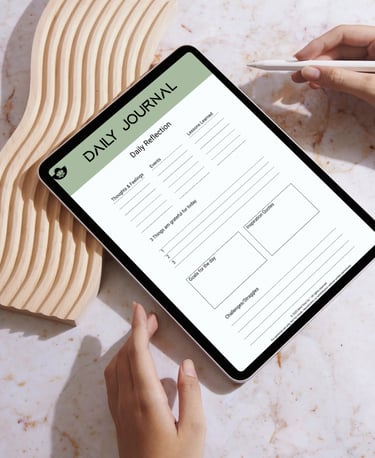
7-Day Mindfulness Journal
A beginner-friendly guided journal to help you build a small daily reflection practice.
Start the 7-Day Mindfulness Journal
Prompt Cards
Short reflection prompts for emotional clarity, self-compassion, and everyday mindfulness.
How to Use These Resources
You do not need to use every tool at once.
Start with one.
Choose the resource that matches what you need today:
If you feel overwhelmed, use the checklist.
If you feel unclear, use a journal prompt.
If you feel emotionally heavy, use a grounding practice.
If you want consistency, try the 7-Day Mindfulness Journal.
Mind Your Co. Tip
A resource works best when it feels supportive, not demanding.
If you download a checklist or journal and only complete one section, that still counts. Self-care does not have to be all-or-nothing.

When to Seek Professional Support
Self-care tools can be helpful, but they are not a replacement for professional mental health care.
If your symptoms feel severe, persistent, or difficult to manage on your own, it may be time to reach out to a licensed mental health professional, doctor, counselor, therapist, or local crisis support service.
The National Institute of Mental Health recommends seeking professional help when severe or distressing symptoms last two weeks or more, including difficulty sleeping, appetite or weight changes, difficulty getting out of bed because of mood, difficulty concentrating, loss of interest in usual activities, inability to complete regular tasks, or feelings of irritability, frustration, or restlessness.
If you feel unsafe, in crisis, or at risk of harming yourself or someone else, contact emergency services or a local crisis hotline immediately.
Crisis Support Resources
In the US & Canada: Call or text 988 (Suicide & Crisis Lifeline).
Canada: 988 Suicide Crisis Helpline
In the UK: Call 111 or contact Samaritans at 116 123.
Emergency Services: Call 911 (US/Canada), 999 (UK), or your local emergency number immediately.
Crisis Text Line: Text HOME to 741741 (US/Canada), 85258 (UK), or 50808 (Ireland).
Caribbean / Jamaica: Local emergency services, nearest hospital, or local mental health crisis support provider
A Gentle Note
Mind Your Co.™ creates tools for self-reflection, mindfulness, journaling, and personal growth. Our content is for educational and supportive purposes only. It is not medical advice, mental health treatment, or a diagnosis. If you are experiencing ongoing emotional distress, feel unsafe, or need personal mental health support, please contact a licensed professional or local crisis support service.
Start With One Gentle Step
Mental wellness is not built in one dramatic moment. It is often built through small, repeated choices:
Pausing before pushing through
Writing one honest sentence
Drinking water
Taking a breath
Naming what feels heavy
Asking for help
Resting without guilt
Returning to yourself after a difficult day
You do not have to do everything today.
Start with one gentle step.
Then another.
Then another.
That is how care becomes a practice.
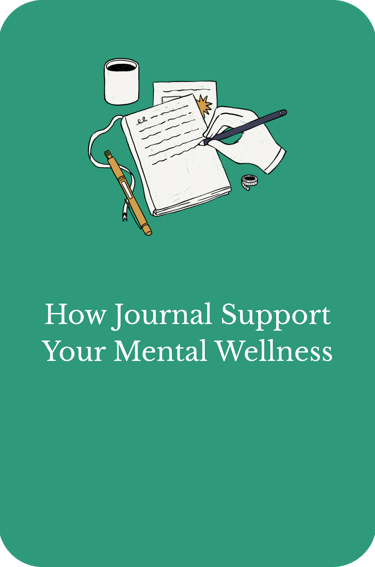











Free Resources
Shop Supportive Tools
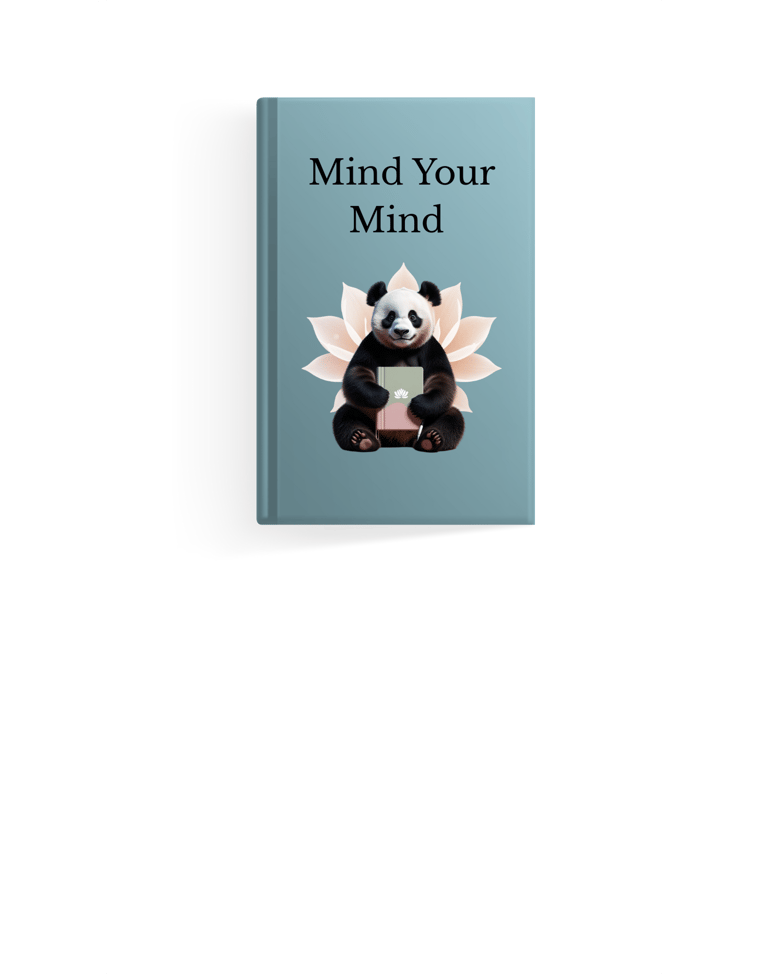

Mind Your Mind Journal™
Cultivate daily mindfulness
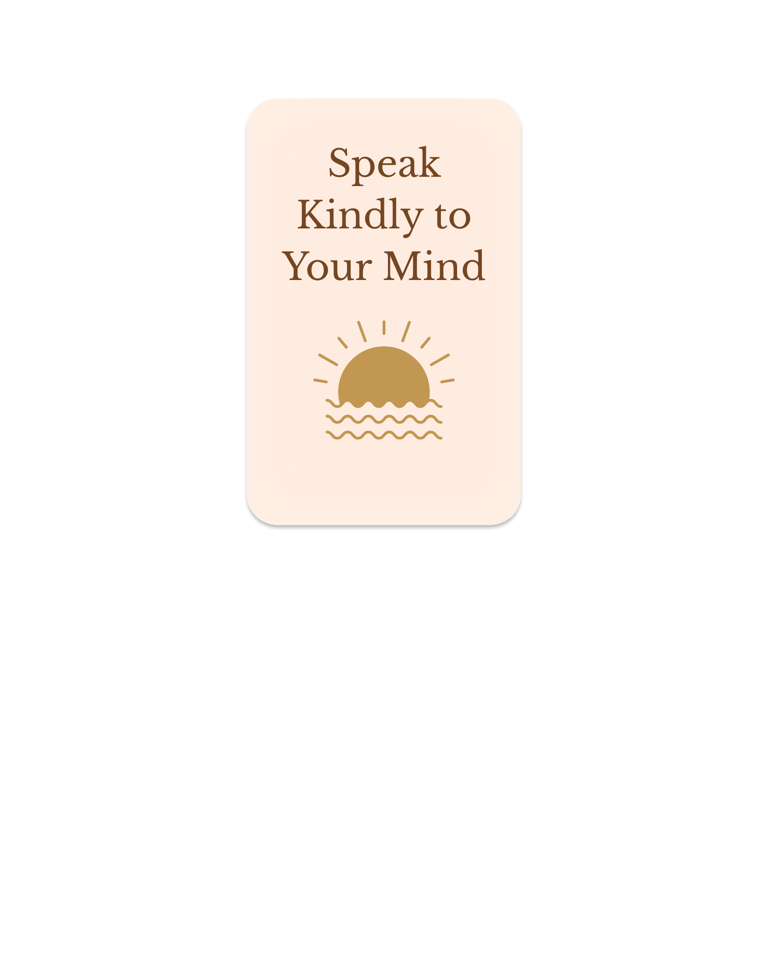
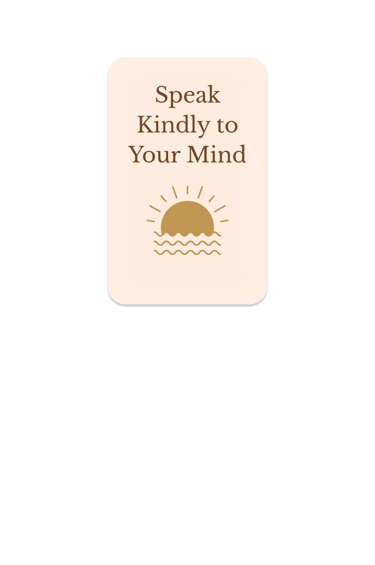
Speak Kindly to Your Mind™ Affirmation Deck
Positive self-talk reminders
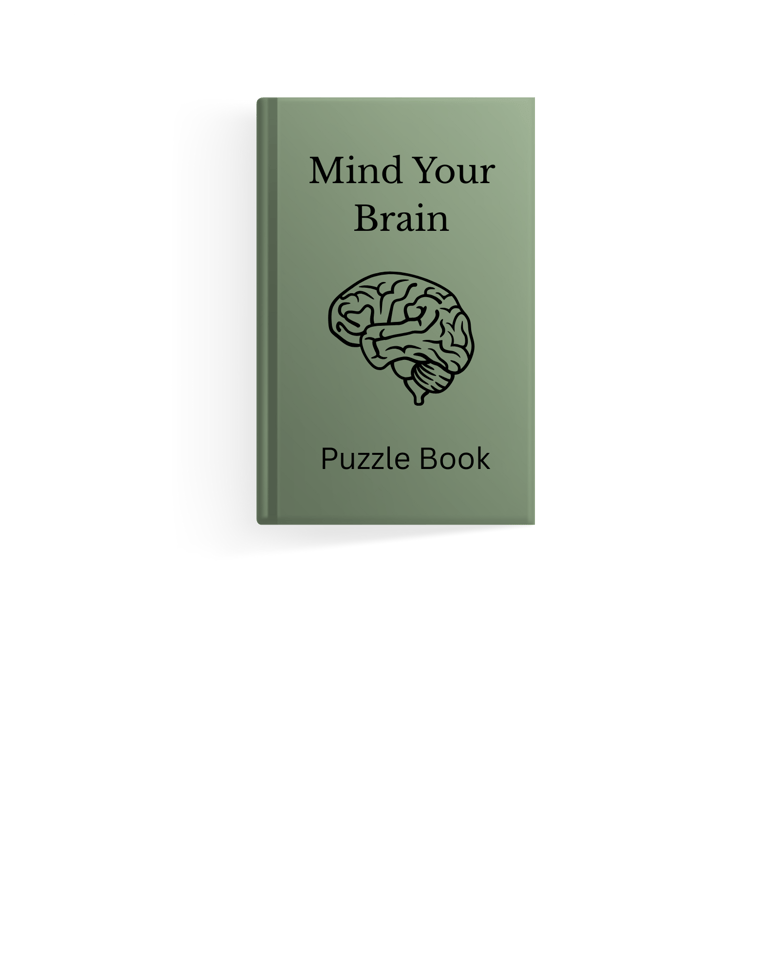
Mind Your Brain™ Puzzle Book
Boost cognitive wellness
Editorial Note
This guide was created by Mind Your Co.™ as part of our wellness library — a growing collection of gentle self-care articles, guided journals, reflection tools, mindfulness resources, and emotional wellness products.
Our content is designed to support everyday reflection and personal growth while staying grounded in compassion, credible sources, and practical lived experience.
Google’s Search Central guidance encourages creators to publish helpful, reliable, people-first content that demonstrates experience, expertise, authoritativeness, and trustworthiness.
Sources & Further Reading
World Health Organization — Mental Health
CDC — Managing Stress
National Institute of Mental Health — Caring for Your Mental Health
National Institute of Mental Health — I’m So Stressed Out Fact Sheet
NCCIH — Meditation and Mindfulness
Mayo Clinic — Meditation and Stress
Expressive Writing in Psychological Science - PubMed
Google Search Central — Creating Helpful, Reliable, People-First Content


"Healing isn't linear, but every step forward is a victory."
- Clarice Turner






"I Learn to see my challenges as opportunities for growth."
- Brian Moten
"Opening up about my mental health has been freeing."
- Joyce Gould
“I realized progress doesn’t have to be loud to be meaningful.”
- Sharon Roddy
You’re Not Alone
Finding Joy Again
From Struggle To Strength
A Journey of Self-Discovery
Healing in Small Steps
Subscribe to our newsletter


Receive free affirmations, journal prompts, and weekly wellness tips.
Join Our Mindful Circle
Your Healing Journey Matters.
Be Part of the Mindful Movement.
(New ?👣)
Start Here
© 2026. All rights reserved.
Explore
Support
Stay Connected
Join the Mind Your Co. community and receive mindful inspiration, self-care tips, exclusive freebies, and early access to new journal drops delivered with calm and intention.
Newsletter
Mind Your Co.™ offers tools for self-reflection, mindfulness, and personal growth. Our content is not a substitute for professional mental health care.